Image Courtesy: ChatGPT
American Animals is a 2018 docudrama inspired by the 2004 rare-book robbery at Transylvania University in Lexington, Kentucky.
The True Story of the Transylvania University Book Heist
On the morning of Dec. 17, 2004, Transylvania University librarians prepared for a visiting collector (Walter Beckman) to view rare books. The man who arrived — Warren Lipka in disguise — shocked and stunned Special Collections librarian B.J. Gooch with a Taser-like stun pen while accomplice Eric Borsuk (posing as “John”) grabbed her and bound her with zip ties. The two other students, Spencer Reinhard and Chas Allen, waited in a van outside for a getaway that went awry within minutes. The thieves could not carry all the heavy Audubon books, dropped volumes in a stairwell, and fled empty-handed.
Critically, all seven targeted items (major Audubon folios, Darwin’s Origin of Species, etc.) were eventually recovered undamaged. Police had been tipped off when the students — under the alias “Walter Beckman” — emailed Christie’s auction house using a university computer. Investigators traced the emails and phone numbers to the four men, executed search warrants on Feb. 11, 2005, and arrested them. They were indicted on multiple federal counts (robbery, theft of cultural objects, etc.) and each pleaded guilty on April 21, 2005. In December 2005, a federal judge sentenced each to 87 months (7 years, 3 months) in prison. The defendants’ appeals did not overturn the penalties.
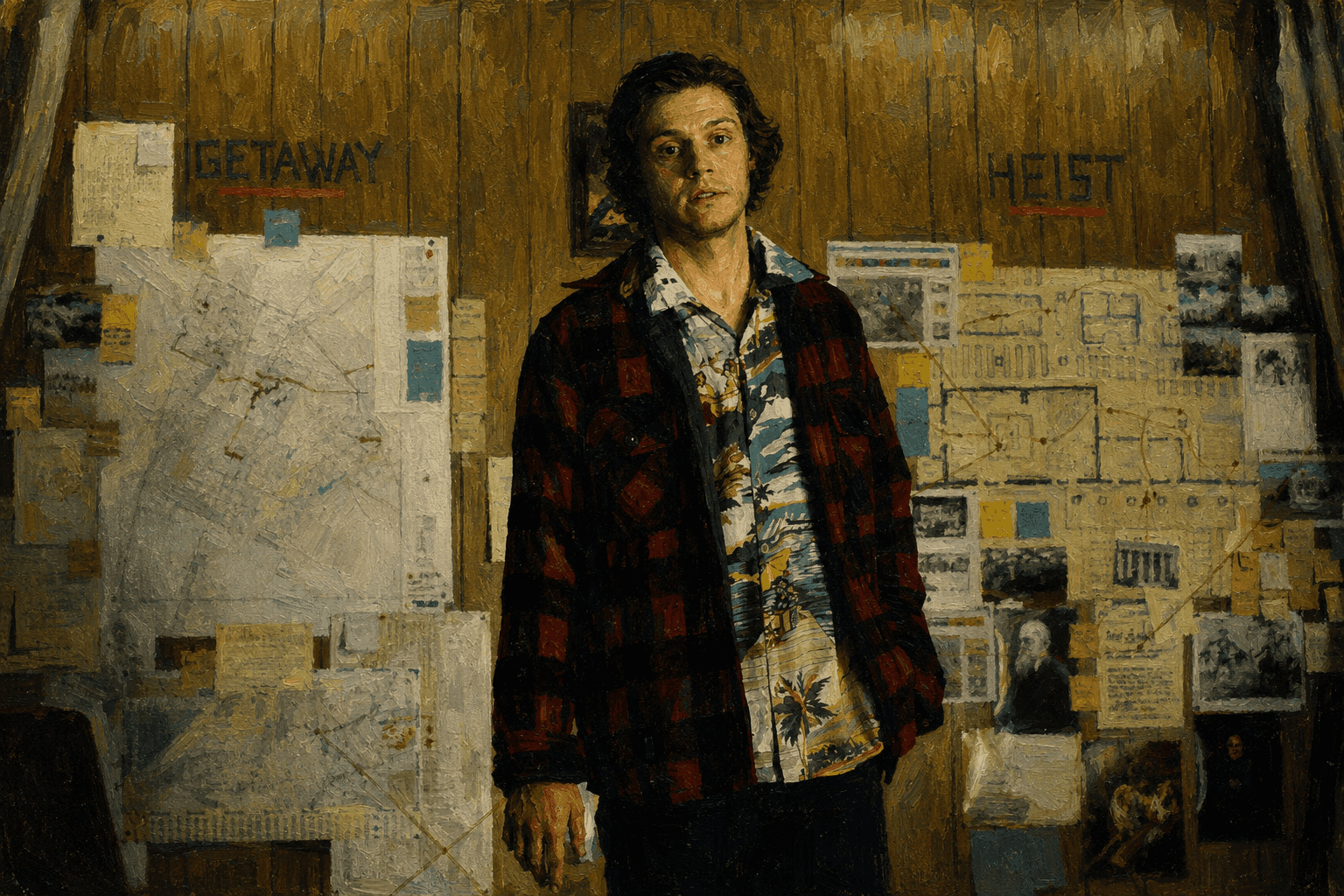
The film American Animals dramatizes this story from Spencer’s perspective. It accurately shows Spencer (Barry Keoghan) spotting Audubon’s Birds of America in the library and hatching a plan with Warren (Evan Peters) to rob it. It correctly depicts the aborted first attempt (dressed as old men, foiled by seeing multiple librarians) and the next-day stun-gun attack. The movie also includes the Christie’s meeting in New York and the FBI hunt via email trace. However, it invented or altered some elements for dramatic effect. For example, the film introduces an “international fence,” Mr. Van der Hoek (played by Udo Kier), and shows Warren going to Amsterdam to meet mysterious buyers. In reality, investigators found no evidence of any Amsterdam contact or a foreign middleman – the plot involved only a Christie’s rep in New York.
Despite some creative liberties, the film’s broad timeline — robbery, crime, capture and punishment — aligns with documented facts. It uses the actual names and even the case’s real “twist” (all items were recovered) as part of its narrative. In short, American Animals admits it “is not based on a true story – it is a true story,” meaning it’s mostly true but filtered through a cinematic lens.
Filmmakers’ Choices
Director Bart Layton’s hybrid approach is a signature feature of American Animals. The movie begins with the tagline “This is not based on a true story. It is a true story,” signalling its blend of fact and fiction. As Layton explained, he read about the case while the men were still incarcerated and began a “pen pal” relationship with them. He built the script around letters and imagined dialogue, then shot actual interviews after they were released. Crucially, Layton let their real voices and words guide the screenplay: “I wrote the script based on [their letters]… included their real voices, things that they said,” then updated it when he interviewed them in person.
The film repeatedly cuts between staged scenes and on-camera reality. We watch actors play out a scene (e.g. the heist or Christoph’s trip to Christie’s) and then immediately see the real Spencer or Warren reacting to it from behind the camera. One notable sequence shows the real Spencer watching the actor playing him drive away to the robbery, a sort of “Ghost of Christmas Future” twist. Layton says this technique was meant to make viewers root for the characters’ fantasy and then jolt them back to reality.
Critics note that this blend lets the film be emotionally gripping without fully trusting the reconstructions. As one reviewer put it, the interviews “provide a counterpoint to the glossy aspirational cool of the fiction”. This style choice means the movie is not a strict doc – it’s a “dramatized documentary” that asks you to question each version. In practice, the interviews confirm many events (the planning, the tensions, the regret) while admitting — sometimes literally — that “you decide what’s true”.