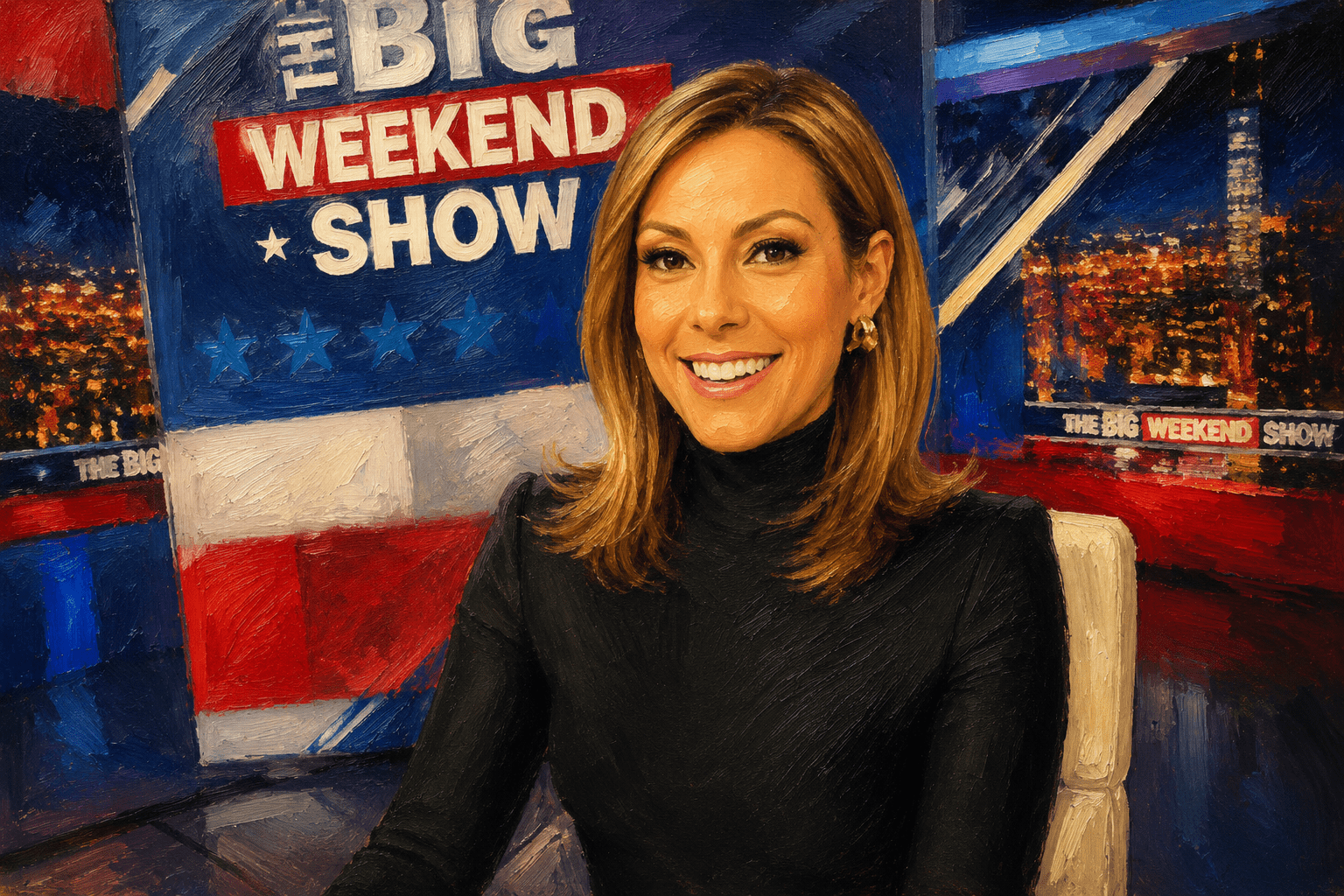
Ariana Bravo is a British broadcaster who has become one of the more recognisable faces in the Formula 1 paddock, which, until fairly recently, had very few of them. She’s the presenter fans see hosting Track TV on the big screens at the circuit, running the Fanzone stage interviews with all twenty drivers, and popping up in the media pen and parc fermé once the chequered flag drops. She also reports for Channel 4’s UK coverage and was confirmed as part of F1TV’s broadcast team for the 2026 season.
Ariana was born on December 26, 1993. What makes her worth writing about properly isn’t just the job title on her Instagram bio. It’s how ordinary the starting point was — and what that says about how sports broadcasting careers actually get built now, as opposed to how people assume they get built.
From an Economics Degree to a Grid Walk
Bravo grew up in England in a household where Formula 1 was simply what was played on Sunday afternoons, courtesy of her dad rather than any career plan of her own. She went on to study Economics at the University of Nottingham and, after graduating, did what most people in her position do: she took a job in auditing. Several years of it, in fact — the kind of role most people would assume was a dead end for a television career, not a launchpad.
Source: Ariana Bravo – Presenter at Formula 1
Nobody discovered her at a networking event. It was Instagram. In her own time, Bravo started posting Formula 1 content — build-up posts before a race weekend, quick reactions after qualifying, and short recaps after the race. She wasn’t performing for an audience of industry executives. She was practising talking to a camera, the way anyone practises a hobby they’re serious about.
That practice eventually caught the attention of the people who mattered. In 2020, someone on Formula One Management’s broadcasting team came across her content and invited her to shadow the team at a race weekend. Early the following year, Autosport asked her to host its podcast, an offer she’s said still catches her off guard, given how established Autosport is within the sport. By June 2021, she’d joined F1’s media team full-time, working her first race weekend at the Austrian Grand Prix that same year.
Source: Meet Ariana Bravo, the face of ‘Track TV’
Building a Full Race-Weekend Role
Five years on, “presenter” undersells what Bravo actually does on a race weekend. She anchors Track TV, the big-screen coverage fans watch trackside between sessions. She runs the Fanzone stage, where all 20 drivers turn up for looser, less-scripted conversations. She covers the media pen, occasionally parc fermé, and reports for Channel 4’s UK broadcasts. When F1TV confirmed its 2026 presenter line-up in March, Bravo’s name was on it again, alongside a roster that now includes Laura Winter, David Coulthard and Juan Pablo Montoya — a far bigger operation than the one she joined in Austria.
One of the most talked-about moments of her career happened at the 2024 British Grand Prix, when she hosted the Silverstone Main Stage segment celebrating Lewis Hamilton’s ninth win at his home race, together with Hamilton and his family. Assignments like that usually go to a presenter the paddock already trusts, not someone yet to get established.
Source: Ariana Bravo on working with F1, Channel 4 and interviewing Sir Lewis Hamilton at Silverstone
Driven by Diversity
Away from race coverage, Bravo co-founded the podcast Driven by Diversity with fellow presenter Steph Turner, after the two met at a Dare to be Different event — the initiative now known as FIA Girls on Track UK. The show interviews people from underrepresented backgrounds in motorsport about how they actually got in, rather than the tidied-up version of that story.
Source: Ariana Bravo: “My race and my gender don’t affect my ability to do my job”
She’s been fairly plain about why it matters to her personally. Asked directly about being a woman of colour in a sport that has historically been neither, she’s said her race and gender have no bearing on whether she can do the job well — a simple point, but one that evidently still needed saying out loud in an industry not used to hearing it from someone in her position.
UntoldMines Exclusive: What Her Path Actually Teaches
Most write-ups of Bravo stop at “social media star becomes F1 presenter,” as if that’s the whole story. It isn’t. The more useful story is the mechanism behind it, because that mechanism has quietly become the standard route into an industry that used to be almost closed off without a broadcasting degree or an industry contact already in your corner.
Look at the sequence again. No agent found her. No production company ran an open casting call. She built a consistent, recognisable voice on a platform she already used for free, aimed at an audience she already understood, and she kept doing it long enough that the people who actually hire for these roles found her rather than the other way around. FOM’s broadcasting team didn’t stumble across a single good clip — they found a body of work with a track record.
That’s a genuinely different hiring model from how these jobs got filled a decade ago, and it’s worth being specific about what it demanded from her: consistency over a long, unglamorous stretch before anyone of note was watching; picking a narrow lane — Formula 1 specifically, not “sport” in general — instead of trying to appeal to everyone; and showing up in person to community-specific spaces like Dare to be Different, where the people who could actually open a door were physically in the room.
This is the key for anyone who wants to get into sports media, broadcasting, or any specialized content area. Don’t wait to be discovered. Instead, share your work openly in a focused area so the right people notice you.
Where She Stands Now
Bravo remains part of F1’s core broadcast team for the 2026 season, working across F1TV, Channel 4 and trackside presenting, with Driven by Diversity continuing alongside her race-weekend commitments. Her route from an economics graduate scrolling Instagram to a fixture of the Silverstone Main Stage is, by her own account, still very much in progress — and given how fast the sport’s global audience keeps growing, it’s unlikely to be the last chapter.
Source: F1 TV announces 2026 presenter line‑up and expanded regional features