
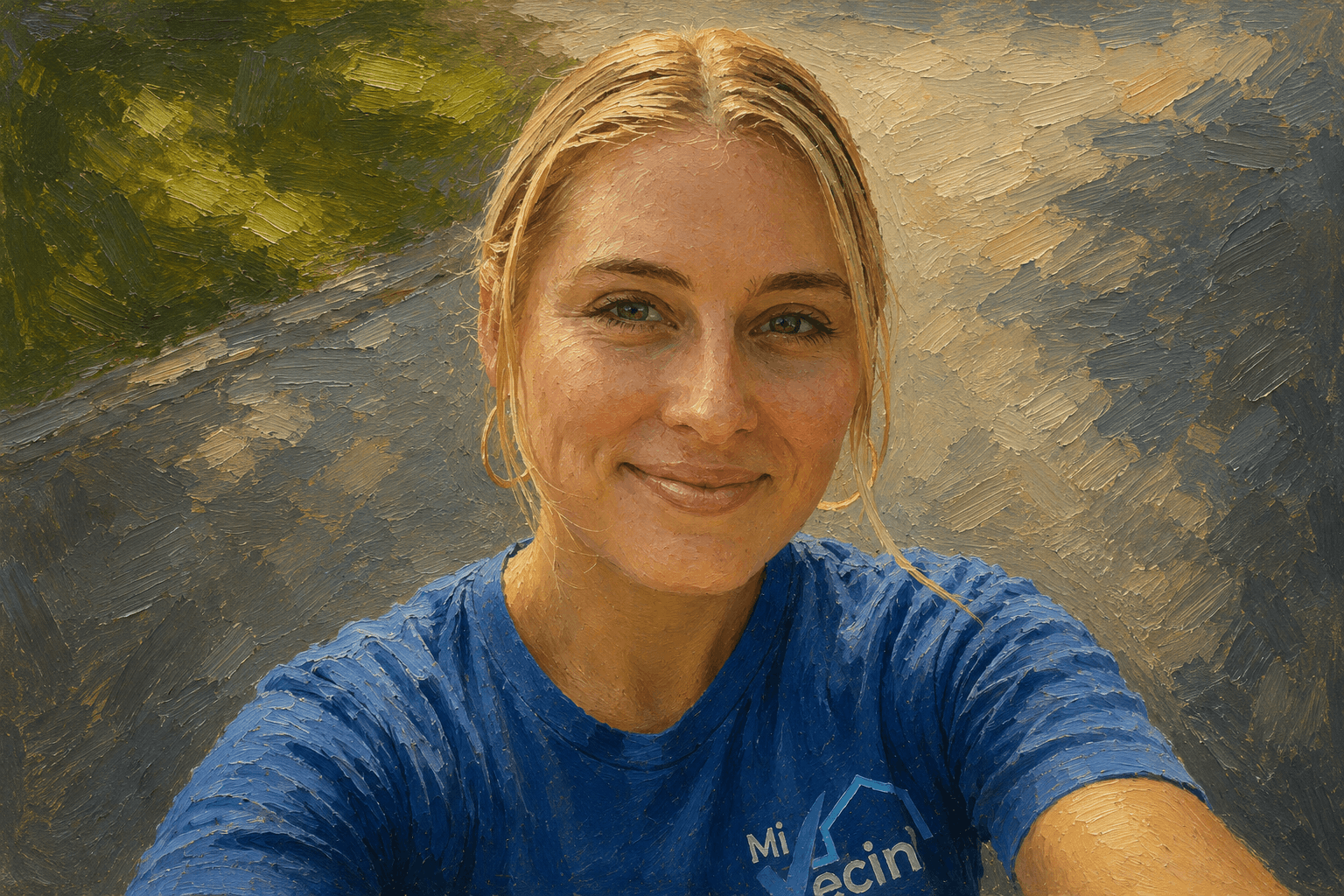
Devon Murphy-Anderson has proven to be a strong and determined political strategist by working as the Executive Director of the Maine Democratic Party during a very unstable 2026 election. She grew up in Maine, spending her early years catching lobsters on her father’s boat in Casco Bay. Her relentless drive was forged not in the polished halls of Washington, D.C., but on the freezing, choppy waters of the Atlantic Ocean.
Early Life and Academic Rigor
Instead of avoiding the hard physical work of the sea, Murphy jumped in fully. At only fifteen, she bought her own lobster boat and started a small fishing business. This was much more than a summer job; it was an important early lesson in working in a male-dominated industry. The challenges and unfair obstacles she met on the water pushed her to commit to social justice and fairness for life. Those early mornings pulling traps built a tough work ethic that later shaped her hands-on style of political organizing.
Leaving the Atlantic behind, Murphy-Anderson started college at Guilford College in North Carolina, where her studies matched her broad interests. She graduated in 2017 with three degrees in Women’s Studies, Religious Studies, and Economics. During her time at Guilford, she chose not to limit her learning to the classroom. She took part in community health research, working with other students to study the economic effects of community health care in the Cottage Grove neighborhood. Her hard work led to a detailed 2017 honors thesis for the Religious Studies Department, titled “Tracing the Roots of Rape: Stories of Rape in the Bible, a Male-Gendered God, and Dualistic Thought”. In this extensive project, she used feminist theology to examine how ancient religious texts and dualistic thinking have shaped modern cultural norms and ongoing violence.
Source: Maine Democratic Party Announces New Executive Director Devon Murphy-Anderson
The Sunshine State Strategist
After graduating, Murphy-Anderson jumped straight into politics. Early in her career, she worked as the Finance Director for Liuba Grechen Shirley’s 2018 congressional campaign in New York’s 2nd District, taking on a strong, established opponent. However, it was in Florida that her reputation as a political rainmaker was truly cemented.
Source: Florida Democratic Party prepares for 2020 with latest hires
Taking on the role of Finance Director for the Florida Democratic Party before the very competitive 2020 election, she led the effort to raise a record $20 million. Understanding that money alone was not enough without real, ongoing voter involvement, she shifted focus to grassroots organizing. Together with Alejandro Berrios, a former regional field director for Joe Biden, she co-founded Mi Vecino (My Neighbor). This nonprofit was created to offer year-round voter registration and engagement in Florida’s Latino communities, and to fight restrictive voting laws like Florida Senate Bill 90.
| Mi Vecino Operational Metrics | Strategic Details |
| Legal Status | 501(c)(3) Nonprofit Organization |
| Primary Region Served | Florida’s I-4 Corridor (High Puerto Rican population) |
| Registration Target | Minimum 30,000 voters per year |
| Funding Goal | $2.3 million for midterm cycles ($1.5M raised by 2022) |
| Strategic Focus | Year-round, culturally competent, Spanish-language engagement |
Operating heavily in the I-4 corridor, Mi Vecino pushed back against the traditional model of dropping into communities only weeks before an election. As a co-founder, Murphy-Anderson frequently highlighted the need to recruit nontraditional candidates who authentically reflect the working-class demographics the party aims to reach, noting that discriminatory assumptions often alienate the very voters the party desperately needs.
Steering the Ship Through Political Hurricanes
Murphy, now known for raising funds and starting local projects, returned to her home state. After a long search, she was named the new Executive Director of the Maine Democratic Party. Party leaders praised her strong Maine background and wide national political experience. She openly criticized Republican Senator Susan Collins, harshly attacking the Senator’s key vote to confirm Supreme Court Justice Brett Kavanaugh, which eventually led to the overturning of Roe v. Wade. Murphy-Anderson regularly pointed out how this decision changed reproductive rights, using the public’s anger to boost the party’s energy.
However, her leadership faced a new and serious challenge in the summer of 2026. The state’s Democratic U.S. Senate nominee, Graham Platner, was accused of serious sexual assault. The crisis threatened to ruin the party’s whole plan to defeat Susan Collins. Instead of dealing with the scandal quietly, Murphy-Anderson took a very public, firm stand that matched the strict ethical principles she outlined in her college thesis, written years earlier.
As the Platner campaign attempted to influence the party’s process for selecting a replacement nominee, Murphy-Anderson released a firm public rebuke. She stated clearly that his team had repeatedly attempted to “put their thumb on the scale” and firmly declared they would have absolutely “no role” in determining the next Democratic nominee. She swiftly organized an emergency meeting of over 100 state committee members to establish an open, transparent nominating convention to choose a successor. Her clear and firm handling of the crisis showed a leader who does not give in to pressure from inside the party, successfully removing a harmful candidate while keeping the party very focused on its bigger election goals.


I am impressed with her intelligence, poise and political savvy as well as her fluency in both common language and rooted beliefs. She seems destined to replace the current senator in due time. We need more skilled and dedicated but strongly ethical approach to communicating with the public.
This is an amazing woman. I believe there is no limit to what she can accomplish. I will look forward to following her career wherever it leads. Best of luck always